

If you have tried buying a new laptop, upgrading your smartphone, or purchasing a next-gen gaming console recently, you have likely run into a wall of "sticker shock." After years of steadily declining memory costs and rising baseline configurations, the consumer tech world has hit a massive bottleneck. Industry insiders and tech communities have dubbed this sudden, painful economic shift "RAMageddon" (or the "RAMpocalypse").
But what exactly is the RAMageddon hardware crisis, why is it happening now, and how is it transforming the tech we buy every single day? Let's dive deep into the silicon crisis of 2026.

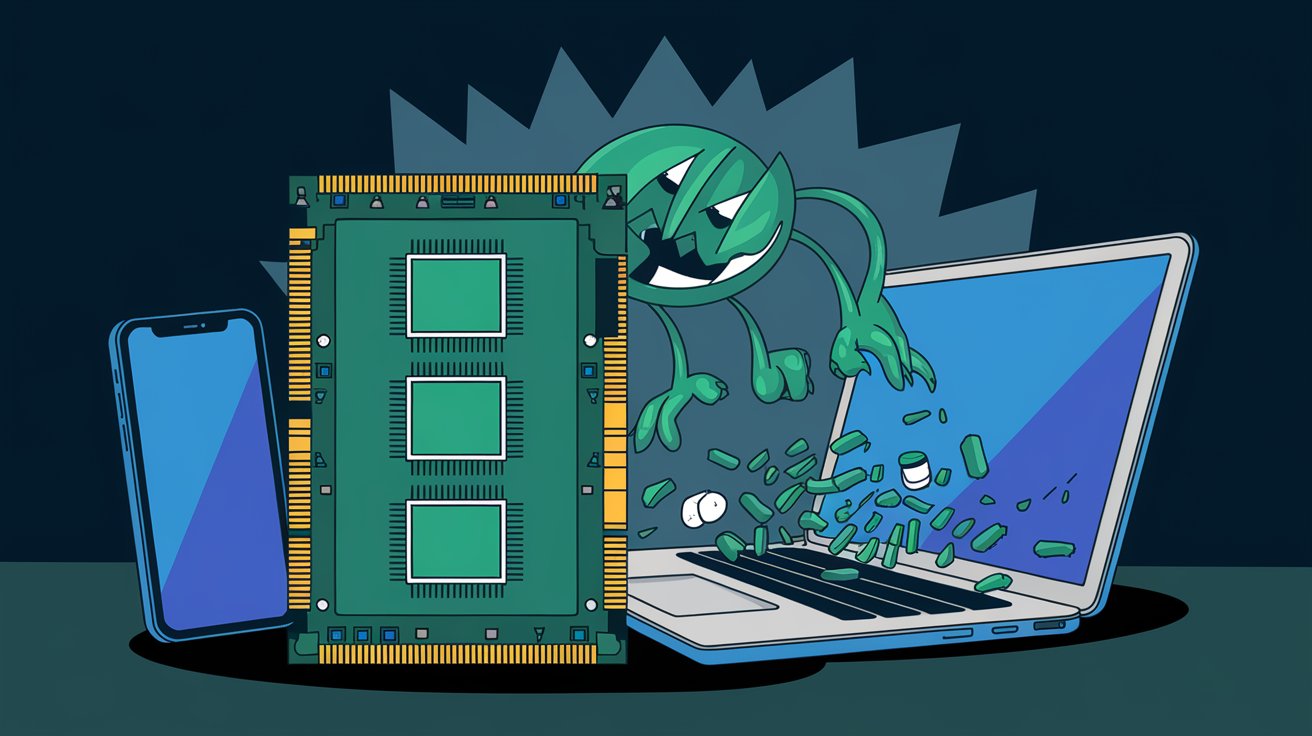
The AI Gold Rush Meets a Squeezed Supply Chain
At its core, RAMageddon is a direct side effect of the ongoing Artificial Intelligence boom. AI model training and real-time inference require massive clusters of high-bandwidth memory (HBM) and enterprise-grade DDR5 DRAM. To feed this insatiable appetite, major semiconductor fabricators have shifted their production priority away from consumer-grade memory components toward high-margin enterprise chips.
Real-World Insight: TrendForce research shows global DRAM contract prices surged an estimated 90% to 95% quarter-over-quarter in early 2026. Global production capacities remain constrained as leaders like Samsung, SK Hynix, and Micron scramble to satisfy high-margin AI compute buyers.
The consequences for consumer electronics have been swift and brutal. With global production capacity strained, the wholesale prices of ordinary DRAM and Low-Power Double Data Rate (LPDDR) memory have soared to historic heights. Manufacturers are left with a difficult choice: absorb the massive cost hikes, downgrade their devices, or pass the premium directly to the customer.
Smartphones: When Memory Outcosts the Processor
The impact of this component crisis is perhaps most visible in the smartphone market. For years, mobile brands competed on offering increasingly high memory specs at low price points. In mid-2026, that strategy has officially collapsed.
"RAM now accounts for over 50% of the total build cost of a new smartphone."
This unprecedented price surge has destroyed the feasibility of high-spec, budget-friendly mobile devices. A notable casualty of this trend is the highly anticipated successor to the CMF Phone 2 Pro. Parent company Nothing officially cancelled the project, citing rising memory prices as the sole reason the device could no longer be produced at a consumer-friendly price point. Across the board, other smartphone makers are quietly raising retail prices or scaling back their launch plans to keep their businesses viable.
Laptops: The Shocking Return of the 8GB Standard
For several years, tech enthusiasts agreed on one universal rule: never buy a laptop with only 8GB of RAM. Yet, walking down the retail aisles in 2026, you will find 8GB configurations dominating the shelves once again.
As reported by major tech publications, laptop manufacturers are actively reverting to 8GB system memory offerings. This is not a step backward in consumer preference, but a desperate cost-saving measure during this component crisis. Because DRAM prices are so high, offering a baseline of 16GB would push budget notebooks out of the reach of average consumers.
Even luxury manufacturers are buckling under the pressure. Tech giants like Apple have recently raised baseline prices for MacBooks and iPads on June 25, 2026, pointing to the skyrocketing cost of physical memory chips as the driving factor behind the retail price hikes.
The Impact Across Tech: From Consoles to Wearables
The RAMageddon hardware crisis is not limited to computers and mobile phones. As comprehensively detailed in the latest leaks and review sheets compiled in the IGN Video Game, Movie, and Entertainment Hub_3 research paper, price hikes have actively trickled down to general gaming hardware. It is ripple-effecting across every single category of consumer hardware:
-
Gaming Consoles Microsoft quietly raised pricing for both the Xbox Series X and Series S consoles, while simultaneously discontinuing the spacious 2TB model to salvage profit margins. Meanwhile, Valve's highly anticipated Steam Machine has faced severe community backlash for launching at a starting price of over \$1,000 (reaching up to $1,175 in markets like Japan) instead of its originally planned $750 target. This is consistent with pricing updates analyzed in IGN Video Game, Movie, and Entertainment Hub_3.
-
Niche Tech & Camera Gear The memory crunch is even threatening the survival of legacy hardware brands. Action-camera pioneer GoPro recently warned investors of a "going-concern" risk, signaling potential bankruptcy due to high component costs eroding their hardware profit margins.
-
Supplier Dominance Memory producers are fully aware of their current leverage. Micron has locked in historically high memory prices with major enterprise clients for the next five years, signaling that a return to cheap RAM is nowhere in sight. Simultaneously, SK Hynix has announced a temporary pivot to prioritize high-volume DDR5 expansion over next-generation HBM4 production to capture immediate consumer demand.
| Metric / Product Category | Pre-Crisis Era (2024-2025) | The RAMageddon Era (Mid-2026) |
|---|---|---|
| Wholesale Memory Cost | ~10% - 15% of build cost | Over 50% of build cost |
| Standard Laptop Baseline | 16GB Unified / DDR5 (Default) | Reversion to 8GB models |
| Mid-Range Smartphone Fate | Vibrant, cost-efficient competition | Project cancellations (CMF, etc.) |
| Console Storage / RAM pricing | High-capacity SSDs reasonably bundled | Discontinuation of high-storage variants |