

In the high-altitude desert of Ladakh, India, climate change isn't a distant threat, it is an immediate crisis. Glaciers are retreating, springs are drying up, and temperatures routinely plummet to -30 degC in the winter. Yet, out of this harsh landscape emerged one of the world's most brilliant eco-engineers: Sonam Wangchuk.
If his name sounds familiar, it might be because he inspired the iconic, genius character "Phunsukh Wangdu" in the Bollywood blockbuster 3 Idiots. But Wangchuk's real-world impact is far more extraordinary than any film. Armed with basic physics, traditional earth-building techniques, and a radical commitment to open-source innovation, Wangchuk is rewriting the rules of climate adaptation.
1. The Ice Stupa: Artificial Glaciers Built from Gravity
Ladakhs farmers face a brutal paradox: they experience severe water scarcity during the spring sowing season (April and May), right before the natural Himalayan glaciers begin to melt under the summer sun.
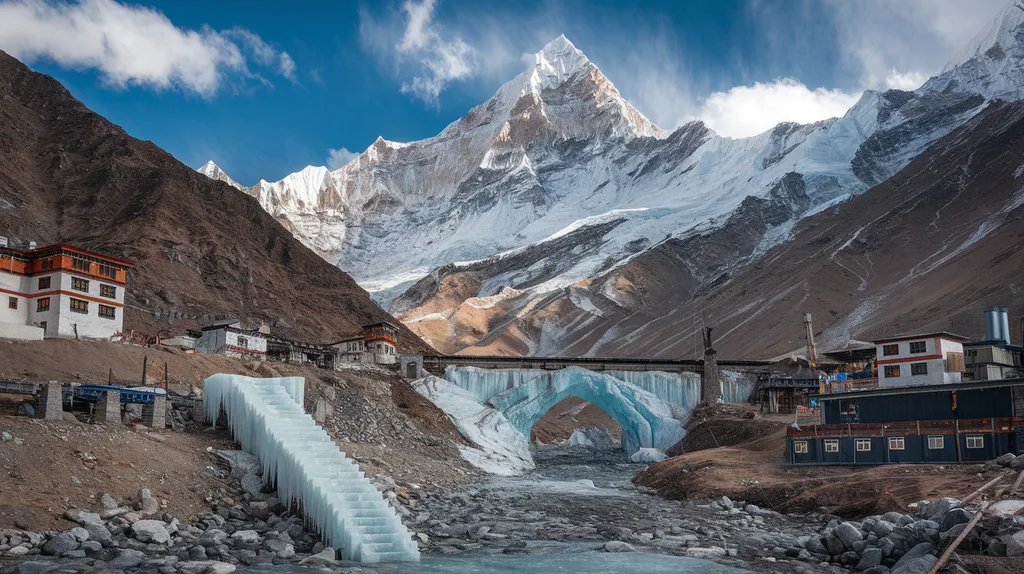
In 2013, Wangchuk noticed a patch of ice under a bridge that remained unmelted well into the summer heat. He realized that if ice could be shielded from direct sunlight, it could last long into the farming season. Because building massive sunshades across valleys was impossible, he changed the geometry of the ice itself by inventing the Ice Stupa - a vertical, conical mound of ice.
By piping water from upstream glacial streams down to the valleys using nothing but gravity, the water pressure forces a vertical fountain to spray into the freezing winter air. The droplets freeze as they fall, building a towering cone of ice.
2. Solar-Heated Rammed Earth Buildings
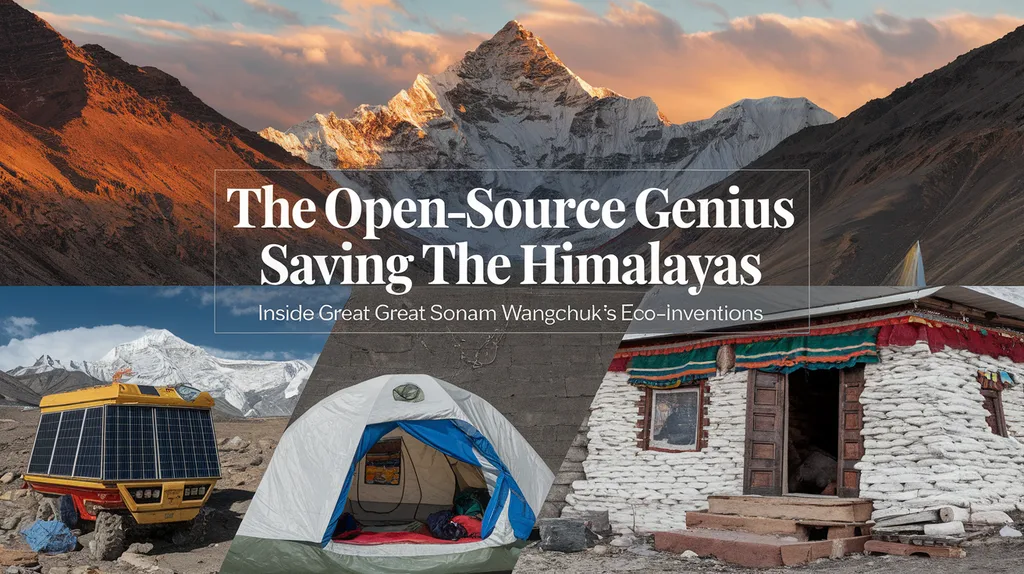
Winter in Ladakh demands immense amounts of energy for heating, historically relying on polluting kerosene or expensive firewood. Wangchuk challenged this by designing passive solar buildings constructed out of rammed earth - a structural blend of local soil, sand, and gravel.
At his alternative school campus, SECMOL (Students' Educational and Cultural Movement of Ladakh), buildings are oriented precisely to face south. During the day, massive windows trap solar heat, while the thick mud walls act as a thermal battery, storing the heat energy and slowly releasing it into the rooms during freezing nights.
Even when external temperatures drop to a bone-chilling -30C, the indoor spaces naturally hover around a comfortable +15Cwithout a single furnace or electrical heater running. The main campus building won the International Terra Award for Earthen Architecture.
3. Mobile Solar Tents for the Military
In 2021, seeing the immense hardships faced by Indian military personnel stationed at high altitudes like the Galwan Valley, Wangchuk engineered a specialized solution: the Mobile Solar-Powered Tent.
Normally, the military burns hundreds of thousands of liters of highly polluting diesel to keep soldiers warm in these extreme conditions. Wangchuk's lightweight, modular tent replaces fossil fuels entirely with clean solar energy.
The tent uses a double-layered structure. The outer layer acts as a greenhouse, capturing solar rays during the daytime, while a highly insulated inner layer prevents that heat from escaping. Designed to accommodate 10 soldiers, the tent remains entirely portable, split into components that weigh less than 30 kg each, allowing troops to carry them across rugged mountain terrain.
The Philosophy: Why There Are No Patents
Despite creating solutions worth millions in environmental and industrial value, Sonam Wangchuk has zero patents to his name.
He fiercely believes that keeping humanitarian technology under wraps restricts its ability to save lives. By choosing not to patent his inventions, communities spanning from the valleys of Peru to the Swiss Alps have been able to replicate and build their own Ice Stupas freely, adapting his open-source code of survival to combat global climate change.
Wangchuk's work stands as a testament that true engineering is not about complex, expensive machinery - it is about understanding local ecology, utilizing the laws of nature, and putting humanity before profit.