

When Marvel Studios releases a flagship blockbuster like Avengers: Doomsday, the technical delivery is as critical as the CGI rendering pipeline. As ticketing platforms roll out specialized badges for upcoming screen options, one new standard dominates the technical hardware listings: Infinity Vision.
Far from a mere marketing buzzword, Infinity Vision represents The Walt Disney Company's ambitious venture into hardware certification and theatrical specification standards. Here is an engineering and strategic breakdown of Disney's new Premium Large Format (PLF) framework--and why it matters for the future of digital cinema distribution.
01 What Is Infinity Vision? The Hardware & Certification Layer
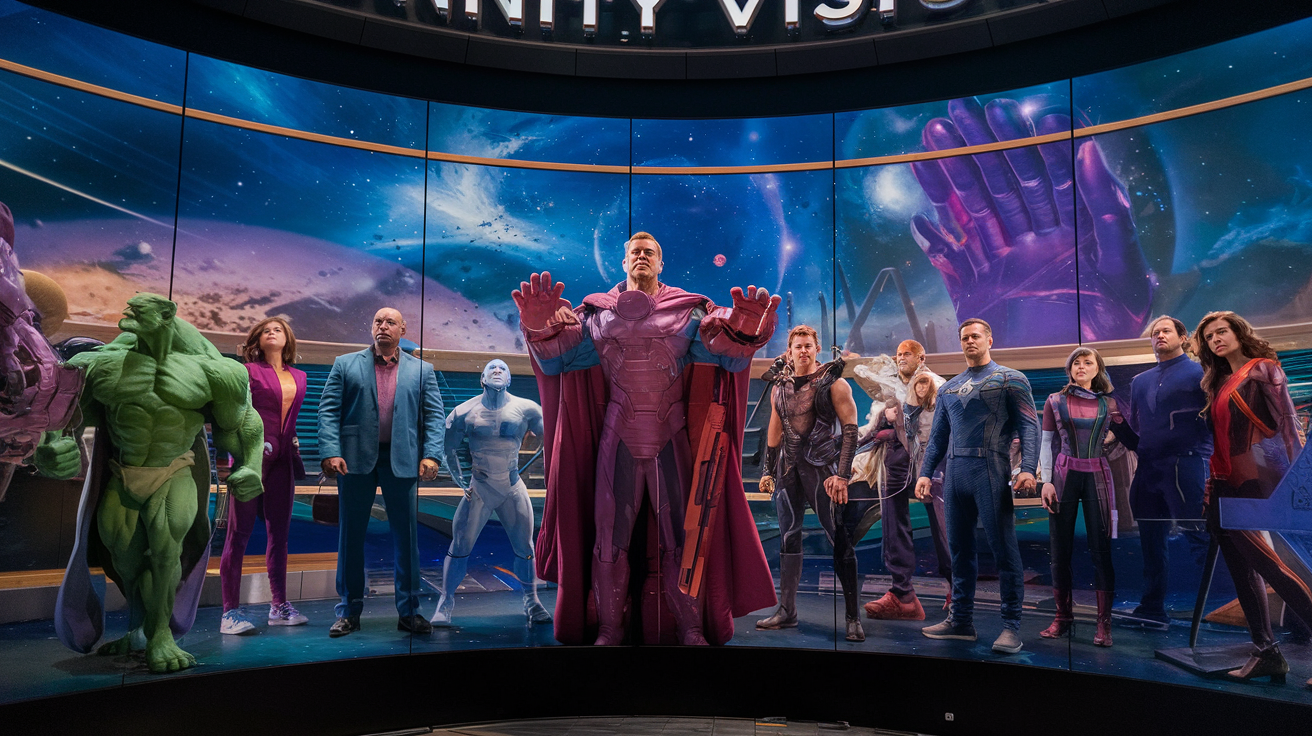
At its core, Infinity Vision is a technical quality certification standard engineered by Disney in collaboration with commercial exhibitors (including Cinemark XD, Regal RPX, Cineplex UltraAVX, and ScreenX).
Rather than manufacturing proprietary projector engines or building bespoke theaters from scratch, Disney operates as a certification body, similar to historical models like THX certification or VESA DisplayHDR standards. Disney's optical and acoustic engineers audit existing PLF auditoriums to verify that their projection engines, screen surfaces, and audio arrays hit strict performance baselines.
Interactive Simulator: Peak Luminance Target
RGB Laser Calibration: Dynamic Shadow Detail Retained
If a venue passes inspection, it earns the Infinity Vision badge for mastering and playback compliance. Theater auditoriums undergo rigorous light-meter sweeps, frequency calibration, and geometry mapping prior to receiving encrypted keys for Avengers: Doomsday DCP packages.
02 The Technical Blueprint: Display & Acoustic Benchmarks
To achieve Infinity Vision certification, a theater auditorium must fulfill precise optical, mechanical, and acoustic criteria designed to handle demanding digital cinema packages (DCPs).
A. Optical Performance & Luminance
Standard xenon-lamp digital projectors often drop below ideal brightness targets during heavy 3D or high-contrast scenes. Infinity Vision mandates modern RGB Laser Projection capable of delivering high peak luminance and wide color gamuts:
- 2D Peak Brightness: Minimum threshold of 14 fL (foot-lamberts), equivalent to approximately 48 cd/m^2, maintaining uniform brightness across the entire surface.
- 3D Peak Brightness: Minimum of 6 fL, eliminating the dimming effect caused by polarized active or passive 3D glasses.
- Color Space Coverage: Adherence to the DCI-P3 digital cinema color space with high contrast ratios to retain deep black levels without crushing shadow detail in VFX-heavy sequences.
B. Screen Geometry and Scale
- Physical Surface Area: Screens must span a minimum width of 45 feet (13.7 meters).
- Aspect Ratio Optimization: Auditoriums are calibrated to display expanded aspect ratios (such as 1.90:1 or native widescreen cinema containers) with minimized letterboxing artifacts.
C. Acoustic Matrixing & Spatial Audio
- Spatial Immersive Audio: Certified auditoriums must support high-channel-count, object-based spatial audio architectures (e.g., Dolby Atmos or custom 7.1 uncompressed discrete audio arrays).
- Frequency Response & Calibration: Sound systems are acoustically tuned to eliminate room resonance, ensuring high-frequency clarity for dialogue alongside uncompressed low-frequency response (LFE channel) during action-heavy dynamic ranges.
03 The Strategic Play: Why Disney Developed Infinity Vision
From a technology and distribution perspective, the launch of Infinity Vision ahead of Avengers: Doomsday solves two critical industry bottlenecks:
Capacity bottleneck during competing tentpole releases.
Fragmented quality specs across lamp vs laser venues.
Guarantees high-luminance laser & spatial audio compliance.
1. Solving the IMAX Capacity Bottleneck
Historically, filmmakers designed superhero tentpoles primarily around IMAX hardware. However, IMAX screens worldwide are severely limited in number. During peak blockbuster windows, tentpoles end up competing directly for screen allocation (for example, Avengers: Doomsday competing with other high-profile releases).
By establishing Infinity Vision, Disney creates its own certified high-end network across thousands of existing non-IMAX PLF auditoriums, expanding its premium seat inventory globally without relying solely on single-vendor hardware availability.
2. Eliminating Quality Variance in "Alphabet Soup" Branding
The commercial PLF market is fragmented across numerous proprietary brands: XD, RPX, UltraAVX, Prime, and ScreenX. Because specs across these brands vary significantly by location--one venue might feature a dual-laser setup while another uses an aging lamp projector--consumer confidence in non-IMAX premium tickets has historically been low.
Infinity Vision acts as a unified software/hardware benchmark, assuring ticket buyers that the theatrical presentation adheres to identical mastering standards regardless of the badge on the outside of the theater.
04 Mastering for Infinity Vision: The Pipeline Impact
For post-production teams at Marvel Studios, Infinity Vision introduces a dedicated mastering workflow. Digital Intermediate (DI) colorists render bespoke Digital Cinema Packages (DCPs) tailored specifically to the high-luminance, high-contrast capabilities of certified laser projectors.
This custom pipeline ensures that visual effects rendering, dynamic range, and spatial audio pan-tracks map precisely to the physical capabilities of certified auditoriums--ensuring the film looks and sounds exactly as intended by the director and cinematographer.
05 The Verdict
Infinity Vision is Disney's technical response to a modern cinema challenge: ensuring uniform, top-tier presentation hardware across a fragmented global theater footprint. By combining high laser luminance, expanded color accuracy, and spatial audio mapping under a single technical seal of approval, Marvel ensures that Avengers: Doomsday delivers an uncompromising technical experience on opening night.