

Let's talk about something that is quietly holding your entire modern world together: copper.
If you are trying to build a long-term investment portfolio today, it is incredibly easy to get distracted by flashy, pure-software plays. We talk endlessly about generative AI models, cloud ecosystems, and sovereign chips. But here is the grounding truth we often miss: you cannot run the software of tomorrow on a ghost grid. Every byte of data, every clean watt of power, and every quantum computing calculation ultimately depends on physical infrastructure. And at the absolute center of that physical reality sits copper.
In this guide, we are going to look past the short-term noise. I want to show you exactly why copper is transforming from a boring, old-school industrial metal into one of the most critical technology enablers of our century and, most importantly, how you can build a sensible, stress-free strategy to invest in it.
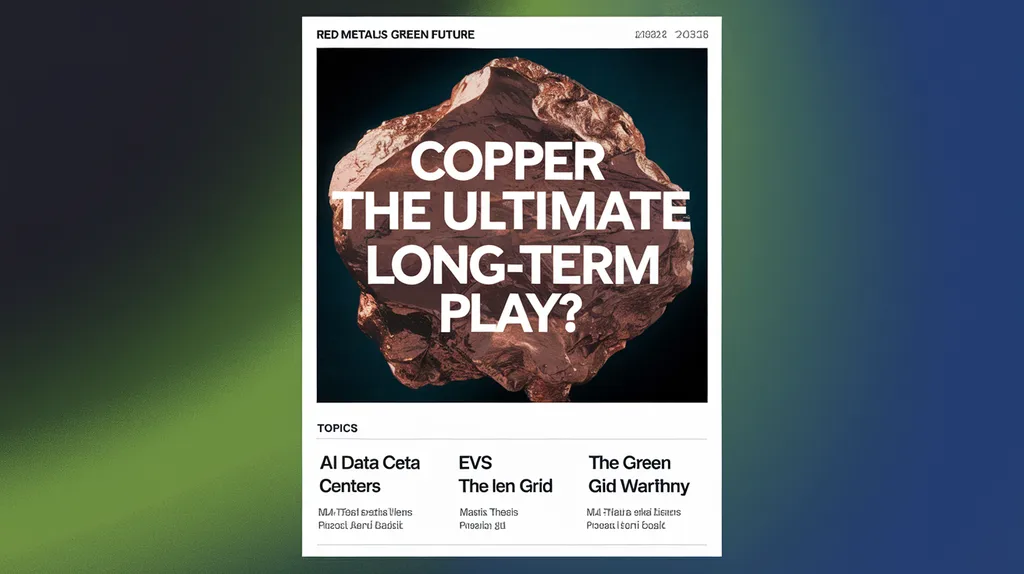
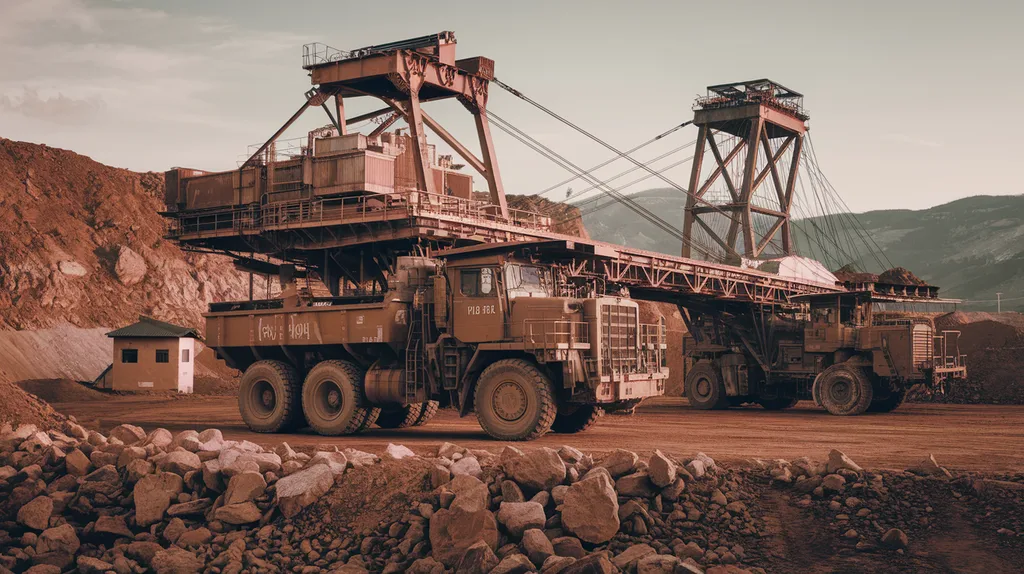
Why Copper is the Unsung Hero of the AI Era
We've all seen the headlines about AI's insatiable hunger for computation. But behind the scenes, there is another hunger brewing: the need for massive amounts of electricity. Data centers are shifting from simple server rooms into high-density power beasts. S&P Global recently warned that data centers could rise from 5% to a massive 14% of total U.S. electricity demand by 2030.
To feed that electricity to AI clusters, we need high-capacity power delivery networks, massive transformers, and advanced heat-management systems. In simple terms: more electricity means exponentially more copper. Copper is the magic thread that carries electricity through buildings, motors, grids, and digital infrastructure, and S&P Global says demand could rise from 28 million metric tons in 2025 to 42 million by 2040. This isn't just a slight upward trend, it is a structural paradigm shift.
The Structural Squeeze: Why Prices are Primed
As an investor, you always want to look for asymmetric dynamics, where supply cannot easily rise to meet explosive demand. Copper is the poster child for this dynamic. While demand is being pulled forward by EVs, charging networks, renewable energy grids, and AI, the supply side is running into a brick wall:
- Declining Ore Grades: The easy-to-reach, high-concentration copper has already been mined. Modern operations have to process far more rock to get the same amount of usable metal.
- Launches Take a Decade: Developing a brand-new, world-class copper mine takes a long time from discovery to first production. You cannot just "turn on" more copper supply when prices spike.
- The Squeeze: Without massive new mining investment, analysts are predicting a structural shortfall of up to 10 million metric tons by 2040.
How to Invest: Mapping Out Your Game Plan
So, how do we play this? Because copper is a commodity, its price is cyclical and highly volatile. If you try to time the market perfectly or bet your entire portfolio on one junior miner in a politically unstable region, you are taking on an immense amount of unnecessary risk.
Instead, let's look at the smartest routes available to US investors, categorized by what they actually deliver to your portfolio:
| Investment Route | What It Gives You | Primary Risk to Watch | Popular US Examples |
|---|---|---|---|
| Copper Miners ETFs | Diversified exposure to global mining company profits. | Operational, geopolitical, and stock market volatility. | COPXICOP |
| Commodity Pools / Funds | Direct, pure-play exposure to copper spot/futures prices. | High price volatility, roll-costs in futures contracts. | CPERCOPP |
| Individual Major Miners | Leveraged upside if a specific giant executes perfectly. | Single-stock risk, mining accidents, local regulatory shifts. | Freeport-McMoRan (FCX), Southern Copper (SCCO) |
A Sensible, Stress-Free Blueprint for Retail Investors
If you want to capitalize on this multi-decade electrification story without losing sleep, I recommend keeping your strategy clean, disciplined, and aligned with these four pillars:
- Prioritize Diversification: Avoid trying to pick the "one perfect mining stock." A diversified ETF holds global giants across various jurisdictions, instantly shielding you from localized mining disasters or political shutdowns.
- Keep It as a "Satellite" Position: Copper is highly cyclical. It is tied to global economic growth, meaning it will experience sharp downturns during recessions. Keep your exposure to a modest size (e.g., 3% to 5% of your overall portfolio) so you can ride out the waves comfortably.
- Commit to the Multi-Year Horizon: Treat this as a structural 5-to-10-year thesis. The transition to clean energy, EV adoption, and AI infrastructure is a marathon, not a sprint.
- Rebalance, Don't Time: When copper prices surge and your position becomes overweight, take some profits. When the cyclical nature of commodities drags prices down, use it as an opportunity to slowly accumulate more.
Ultimately, the physical world always wins. Software may eat the world, but copper is the infrastructure it runs on. By taking a balanced, diversified, and long-term approach, you can turn this massive physical bottleneck into one of the most resilient drivers of your portfolio's growth.