

We know that video games are no longer just about escapism; they are rapidly becoming one of the most powerful tools for social change. By placing players in the shoes of activists and changemakers, "Serious Games" are revolutionizing civic education and environmental awareness.
Rise of Educational Activist Games
For decades, video games have been recognized primarily as a medium of entertainment. However, a new genre has emerged and gained significant traction: Serious Games. These are games explicitly designed with an educational purpose, focusing on social change, civic responsibility, and environmental activism.
My experience says that serious games provide an interactive learning environment where players don't just passively consume information; they actively participate in simulations of real world scenarios. This hands-on approach is proving to be a highly effective way of shaping civic and environmental awareness.
"Games allow us to experience systems firsthand. When you play a political simulation, you aren't just reading about democracy; you are actively testing its limits and understanding its flaws."
Interactive Experiences for Social Impact
By simulating political systems, civic struggles, and environmental crises, games allow players to grasp complex, systemic issues that might seem abstract in a textbook or a traditional news article.
Why Serious Games Work
- Active Participation: Players must make decisions with direct consequences, fostering a deeper understanding of cause and effect.
- Empathy Building: By stepping into the perspectives of marginalized groups or activists, players develop genuine empathy for real-world struggles.
- Accessibility: Free political browser games break down barriers to entry, allowing anyone with an internet connection to engage with these pressing topics.
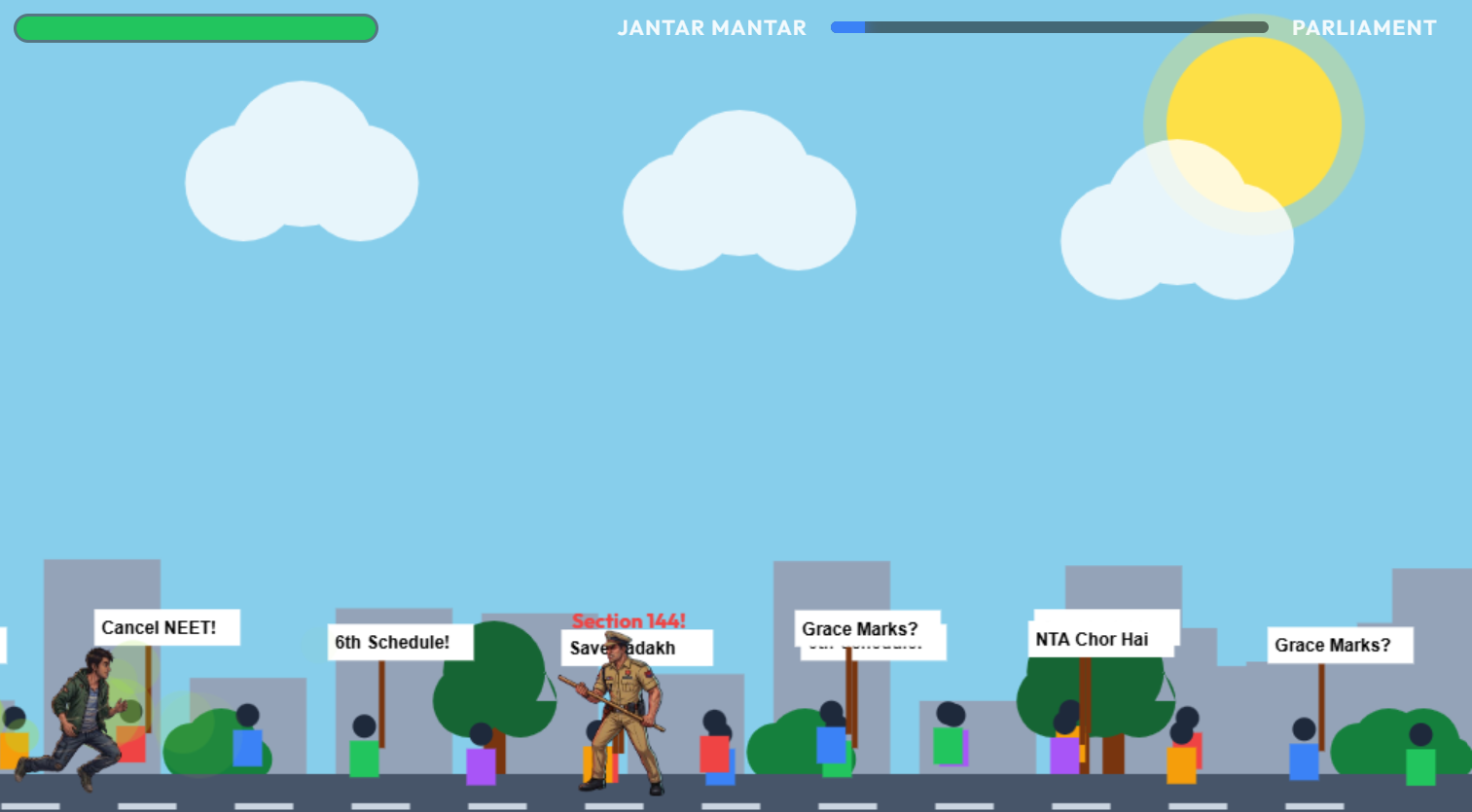
One striking example of this interactive approach is the March to Parliament political simulation game. This browser-based experience immerses players in an arduous journey from Jantar Mantar to Parliament. Players navigate challenges by stepping into the shoes of iconic figures, such as climate activist Sonam Wangchuk, highlighting the real-world struggles of social impact movements in India.
Building a Better Future Through Play
The beauty of educational activist games lies in their ability to foster empathy by putting players directly into the perspectives of those fighting for justice—be it students seeking fair treatment or environmentalists protecting fragile ecosystems.
As the gaming industry continues to evolve, the intersection of gaming and social activism will undoubtedly grow. Serious games are not just a passing trend; they are a vital tool for the next generation of digital natives to understand, interact with, and ultimately improve the world around them.